
Late updated: 01 Jan 2026 13:01
Written by:
Exploring the Benefits of Sensory Play: Enhancing Young Learners' Development
Sensory play serves as a fundamental aspect of child development, offering numerous benefits for young learners as they navigate the world around them. Through engaging activities that stimulate the five senses—sight, hearing, touch, taste, and smell—children enhance their cognitive abilities, language skills, and motor functions. By allowing children to explore various textures, sounds, and movements, sensory play lays a strong foundation for lifelong learning and growth.

The beauty of sensory play lies in its simplicity and effectiveness. Activities such as squishing playdough, splashing in water, or sorting different materials may seem like mere fun at first glance, yet they play a crucial role in brain development. These hands-on experiences encourage kids to solve problems creatively, improve their attention spans, and even aid in emotional regulation.
Understanding the significance of sensory play helps us appreciate its place in early childhood education. As educators and parents, embracing these activities contributes to a rich learning environment that fosters curiosity and discovery. Our goal is to integrate sensory play into daily routines, offering children endless opportunities to learn and grow.
Key Takeaways
- Sensory play enriches children's cognitive and motor development.
- It provides engaging, hands-on learning experiences.
- Integrating sensory activities aids lifelong learning and growth.
Understanding Sensory Play and Its Developmental Foundations
Sensory play is a crucial aspect of early childhood development, offering young learners opportunities to explore and engage with their environment using all their senses. Through activities designed to stimulate sight, touch, hearing, and more, children build essential skills that form the foundation for growth in various developmental areas.
What Is Sensory Play?
Sensory play involves activities that engage a child's senses, such as touch, smell, taste, sight, and hearing. These activities are designed to help children explore, discover, and make sense of the world around them. By interacting with different textures, sounds, and sights, children enhance their sensory processing abilities. This type of play is not only fun for children but also provides crucial stimulation that aids in brain development.
For example, sensory play promotes neural connections that establish pathways for learning and self-regulation. This can be as simple as playing with textured materials like playdough or kinetic sand, which supports tactile learning and fine motor skills. Engaging in sensory play activities can help children develop language skills, cognitive growth, and social interactions.
Key Types of Sensory Activities for Young Learners
Sensory activities can vary widely, encompassing a range of materials and experiences that cater to different senses. Tactile play might include activities like finger painting, using slime, or exploring sensory bins filled with varied objects. These experiences encourage children to touch and manipulate materials, which helps them refine their fine motor skills.
Visual sensory play could involve colourful items or finding objects in a sensory bottle, promoting visual tracking and attention to detail. Auditory experiences might include listening to various forms of music or identifying different sounds. In addition, proprioceptive and vestibular activities, such as rolling on a ball or using a mud kitchen, help children develop awareness of their body position and balance. By engaging in a variety of sensory activities, children develop a broad set of skills foundational to their growth.
The Role of Sensory Engagement in Early Childhood Development
Sensory engagement plays a pivotal role in a child's early development across multiple domains. It supports the growth of cognitive abilities by encouraging critical thinking and problem-solving skills. As children interact with different sensory materials, they test cause-and-effect relationships, enhancing their scientific inquiry and cognitive flexibility.
Furthermore, sensory play is essential for emotional regulation and social skills development. As children engage in imaginative play and explore a sensory-rich environment, they learn to express emotions and share experiences with peers. Activities such as sensory stations in group settings foster cooperation and communication skills.
Through sensory integration, children learn to process and respond effectively to sensory input, which lays the groundwork for future learning experiences and personal development. A well-structured sensory play environment is vital for aiding children in gaining confidence in their abilities while discovering the joy of learning.
Core Benefits of Sensory Play for Young Learners
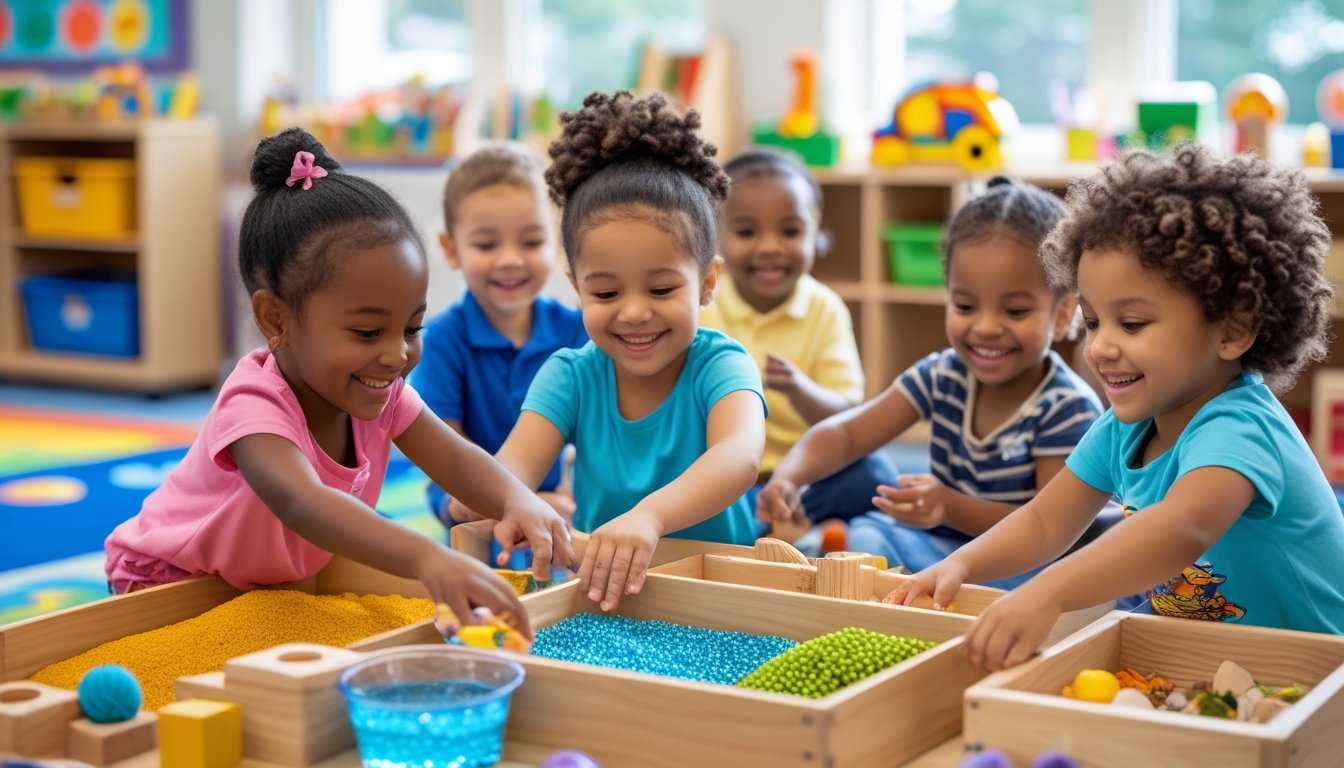
Sensory play plays a pivotal role in nurturing various developmental areas in young learners. By engaging multiple senses, such activities support not just physical growth but also cognitive, emotional, and social development.
Enhancing Cognitive Development and Problem-Solving Skills
Sensory play is instrumental in boosting cognitive development in children. It encourages exploration and experimentation, fostering critical thinking which is vital for problem-solving skills. For instance, when children manipulate different textures and materials, they're learning how to approach daunting problems creatively. Through this process, youngsters begin to understand cause-and-effect relationships, essential for cognitive growth. Engaging in sensory activities like sorting, matching, and identifying objects also strengthens memory and attention skills. As they discover solutions, young learners build confidence in their abilities, creating a robust foundation for future learning challenges.
Supporting Language and Communication Growth
Interaction during sensory play significantly enhances language and communication abilities. Children are naturally inclined to express their thoughts and observations as they explore different sensory experiences. This might involve describing a texture or narrating their actions, thereby broadening their vocabulary. Engaging in group activities allows for conversational exchanges, vital for developing social communication skills. Through storytelling and imaginative play, we see children practising pre-writing skills too. The dialogue during these activities promotes an understanding of language structure, enhancing both verbal and non-verbal communication capabilities.
Facilitating Fine and Gross Motor Skills
Sensory play contributes significantly to the development of fine and gross motor skills. Activities such as moulding clay or threading beads enhance fine motor skills by improving hand-eye coordination and dexterity. These tasks require precision, leading to better hand control needed for writing and other tasks. On the other hand, gross motor skills benefit from activities that involve larger movements, like dancing or balancing on different textures. These movements support physical development by improving body coordination and spatial awareness. By engaging in such play, children become more adept at navigating their physical environments confidently.
Promoting Emotional Regulation and Self-Management
Sensory play offers numerous opportunities for emotional regulation and self-management. The calming effects of engaging with tactile materials can provide soothing sensory experiences, helping children self-soothe during moments of stress. Activities that involve routine and repetition bring predictability, aiding in self-regulation. Incorporating elements like soft sounds or rhythmic motions can further mitigate anxiety, enabling a sense of calm. Moreover, creative tasks encourage imagination, offering an outlet for self-expression. As children engage in such activities, they learn to manage their emotions more effectively, contributing to overall emotional resilience.
Frequently Asked Questions
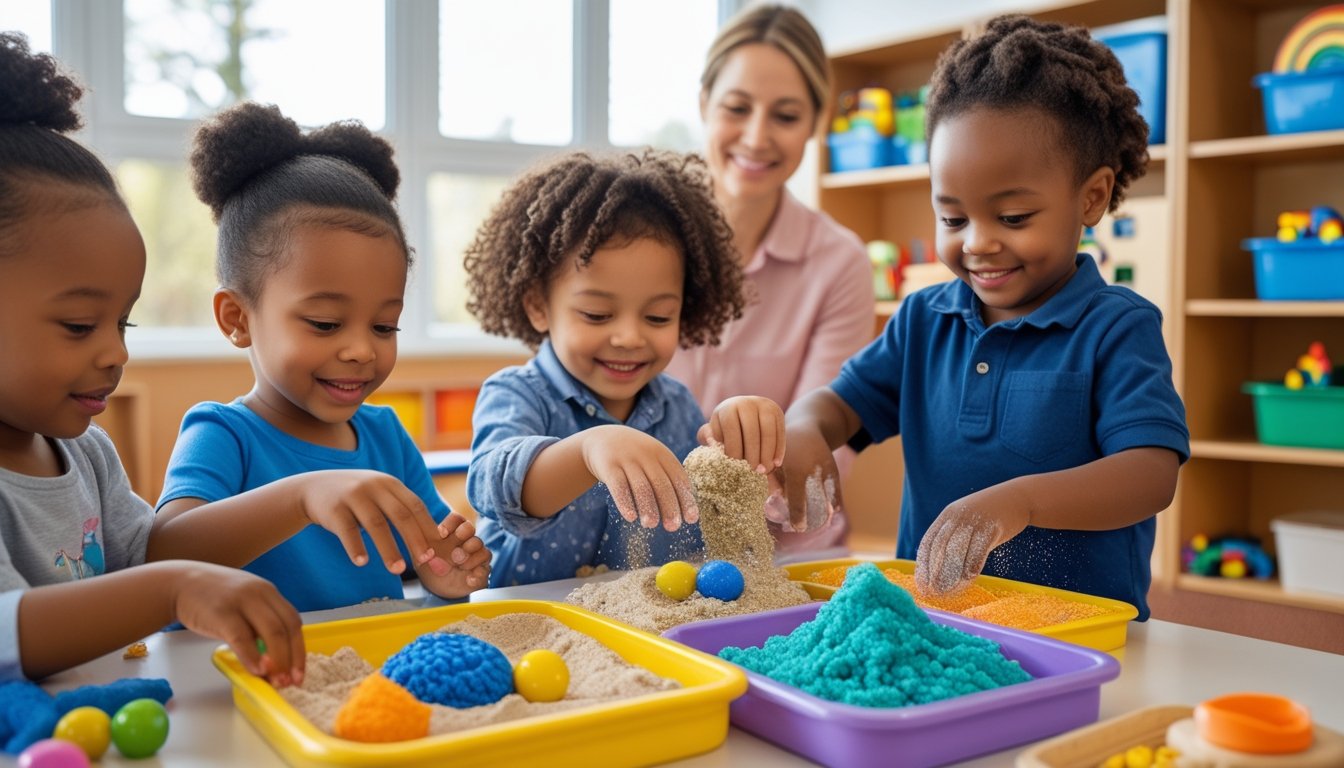
Our aim is to address common questions about sensory play's impact, particularly its role in young learners' development. From language acquisition to enhancing social skills, sensory play is a critical component in early childhood education.
What are the key benefits of sensory play in early childhood development?
Sensory play promotes cognitive growth, motor skills, and emotional resilience. It stimulates curiosity and fosters creativity by encouraging children to explore their surroundings. Through engaging different senses, children develop a comprehensive understanding of the world.
How does sensory play support language acquisition in young children?
Through sensory experiences, children are exposed to new vocabulary and concepts. When they touch, see, and interact with materials, they learn to describe their experiences. This helps them build a rich vocabulary and enhances their communication skills.
Can sensory play enhance problem-solving skills in toddlers?
Sensory play challenges toddlers to think creatively and solve problems through experimentation. By manipulating different textures and materials, they learn cause-and-effect relationships and develop logical thinking. This methodical exploration is key in honing problem-solving abilities.
In what ways does sensory play contribute to the social and emotional development of preschoolers?
Sensory play provides opportunities for social interaction and cooperation among peers. It helps preschoolers manage emotions by offering soothing materials that promote relaxation. Additionally, sharing sensory experiences fosters empathy and builds social connections.
What are effective strategies for integrating sensory play into a structured curriculum?
Incorporating sensory activities into thematic units can make concepts more tangible. Teachers can design hands-on lessons that align with learning goals while using sensory materials. Structured play sessions that focus on specific skills ensure sensory play is purposeful and educational.
How can sensory play be adapted for children with different learning needs?
Adapting sensory activities to suit individual needs is essential. Customising materials and approaches to cater to various sensory preferences enables all children to benefit. Providing alternative ways to engage encourages inclusivity and accommodates diverse learning styles.