
Late updated: 24 Nov 2025 16:11
Written by:
Fostering Teamwork Skills In Young Learners: Building Future Leaders
Fostering teamwork skills in young learners is an essential component of early education that equips children for future academic, social, and professional success. Developing communication, empathy, and problem-solving abilities in a group setting does not just prepare children for school but also lays the groundwork for collaboration in later life. These skills enable children to effectively share ideas, respect diverse perspectives, and support collective goals.
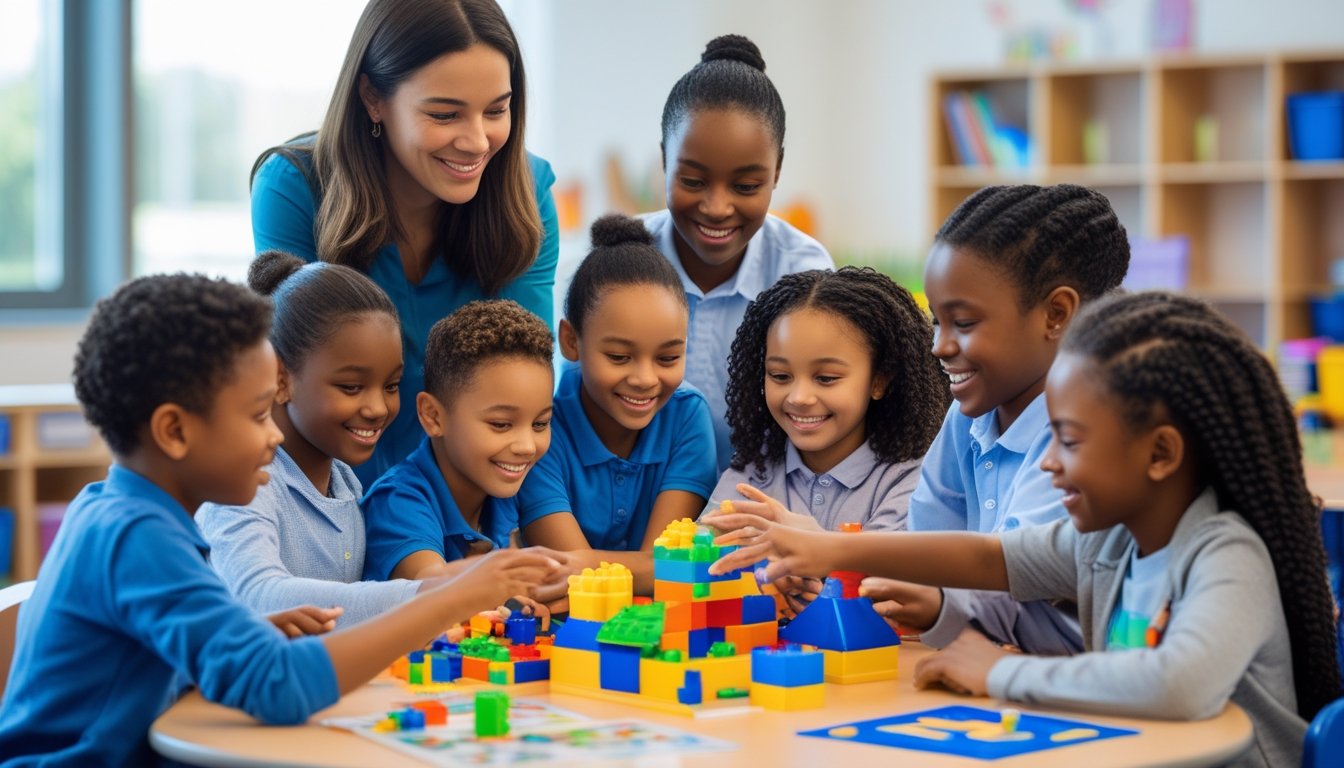
In our interconnected world, the importance of these skills cannot be overstated. By engaging young learners in activities that require teamwork, we nurture a sense of community and shared purpose. Engaging exercises, such as group projects and team-building activities, are key strategies that promote collaborative learning and are instrumental in developing these fundamental attributes.
When children experience the benefits of working together at an early age, they are more likely to carry these positive interactions into adulthood. Encouraging teamwork in young learners is not merely an educational trend; it is a critical investment in their futures, fostering not only academic excellence but also emotional intelligence and social connections.
Key Takeaways
- Teamwork skills are crucial for young learners' success.
- Practical strategies help foster these essential skills.
- Encouraging teamwork shapes future academic and social development.
Core Teamwork Skills for Young Learners
In young learners, building core teamwork skills enhances their ability to communicate, empathise, and collaborate effectively in group settings. By focusing on communication, empathy, responsibility, and accountability, children gain the skills necessary to contribute to shared goals and work productively in teams.
Understanding Teamwork and Collaboration
Teamwork involves more than just working together. It requires collaboration and a focus on shared goals. When young learners participate in group activities, they learn to value each other's input and recognise the importance of working towards a common purpose. This process helps them build skills in problem-solving and adaptability, vital for their future interactions. By fostering a collaborative mindset early on, children learn the importance of cooperation and recognise the benefit of diverse perspectives in reaching effective solutions.
Essential Communication Skills
Effective communication is a cornerstone of teamwork and involves both listening and expressing ideas clearly. When children articulate their thoughts, they contribute more constructively to group discussions. Active listening, on the other hand, helps them understand their peers' perspectives, which is essential for resolving conflicts and building consensus. Teaching young learners to ask questions and provide constructive feedback also enhances their communication skills. These abilities not only aid in group settings but also lay the groundwork for successful interpersonal interactions throughout life.
Developing Empathy and Perspective-Taking
Empathy and perspective-taking are integral to successful teamwork. When children develop empathy, they can understand and share the feelings of others, fostering a supportive team environment. Perspective-taking involves recognising and appreciating different viewpoints, which enhances group cohesion. This skill encourages learners to approach problems with an open mind and enables them to offer more inclusive solutions. In promoting these qualities, we help young learners build stronger social connections and create a more understanding and cooperative atmosphere.
Responsibility and Accountability in Groups
Understanding and accepting responsibility within a team context teaches young learners the importance of contributing to group success. When each member is accountable for their tasks, it promotes a sense of ownership and commitment to shared goals. Encouraging children to take responsibility for their roles helps them appreciate the impact of their contributions on team dynamics. By reinforcing accountability, we prepare them for future responsibilities, ensuring they become reliable and effective team members in any group setting they engage with.
Practical Strategies for Fostering Teamwork in Early Childhood
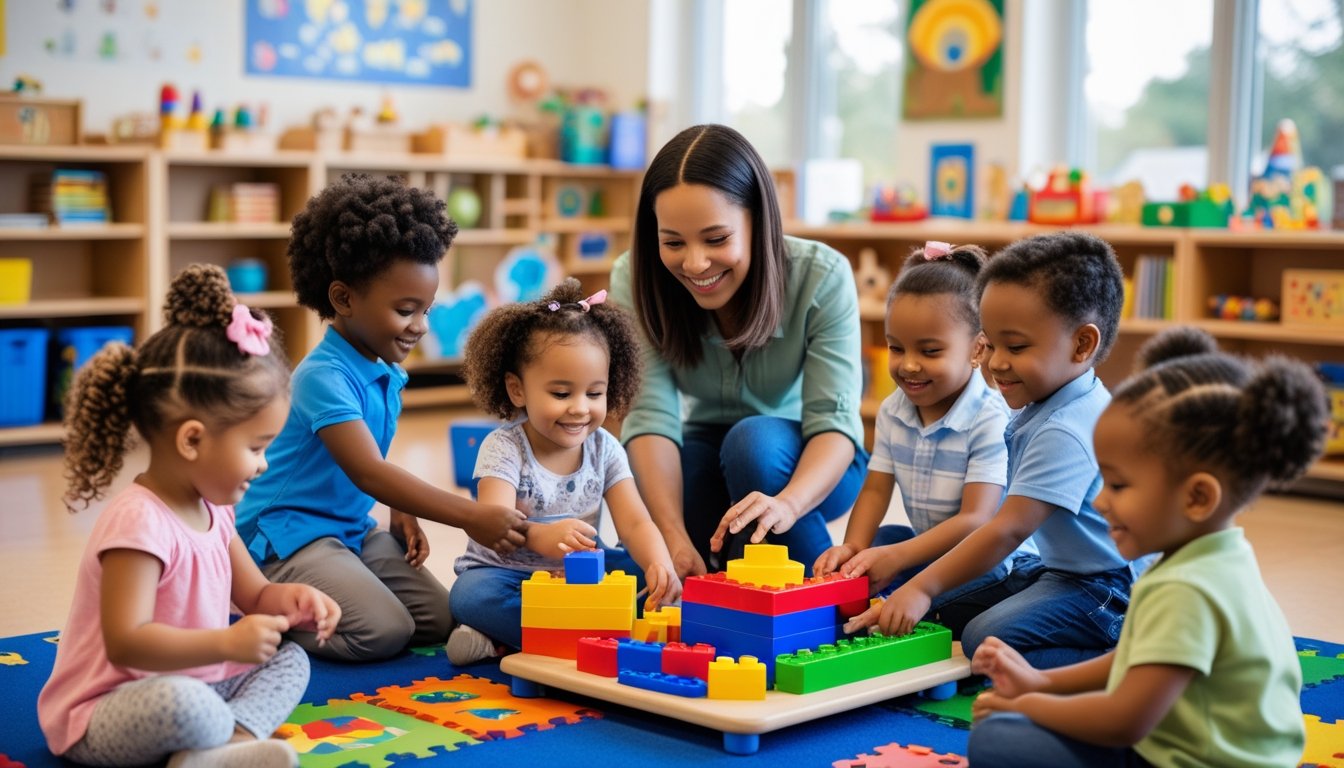
To cultivate teamwork skills in young learners, it is essential to integrate structured group activities and opportunities for cooperative play into early childhood education. These experiences promote crucial skills such as conflict resolution, problem-solving, and social interactions that children will use throughout their school years and beyond.
Facilitating Group Activities and Projects
Structured group activities and projects are an excellent way for children to start developing team dynamics. By engaging in tasks that require joint efforts, such as building a model or creating a class garden, children learn the importance of sharing ideas and responsibilities. These projects offer an interactive learning environment where children practise patience and creativity, contributing equally to achieve shared goals.
Using clear roles in group tasks helps youngsters appreciate different strengths within a team. Teachers can enhance these collaborative experiences by giving positive reinforcement, praising effective communication and cooperation. Through these activities, children not only reach project milestones but also build essential social skills, which are significant for both early childhood development and future academic success.
Encouraging Cooperative Play and Collaborative Learning
Cooperative play is fundamental in preschool settings and features playdates and classroom activities that promote sharing and turn-taking. Through games like building blocks or group storytelling, children engage in social interactions that are crucial for developing empathy and emotional intelligence.
By guiding these activities, educators support learning outcomes by encouraging children to listen and contribute to a collective narrative or goal. Cooperative learning can be effectively facilitated through interactive setups where children work in pairs or small groups, promoting collaborative problem-solving and strengthening bonds among peers. This type of learning not only enhances the child's academic journey but also nurtures life skills that aid in personal and social development.
Supporting Conflict Resolution and Problem-Solving Skills
Conflict resolution is another critical aspect of team-oriented activities. As young children work in groups, disagreements are inevitable. It's important to guide them in using discussion to resolve their differences, fostering an environment where they can express their feelings and listen to others. By teaching problem-solving skills, we help children learn strategies to address challenges constructively, encouraging an atmosphere of respect and cooperation.
Teachers should model effective conflict resolution techniques and provide scenarios where children can practise these skills. This process builds their confidence in managing conflicts independently, an important step in their early childhood education. Educating children in these early years on how to resolve disputes peacefully ensures that they grow up as emotionally intelligent individuals who value teamwork.
Frequently Asked Questions
In this section, we address common queries regarding the promotion of teamwork skills in young learners. Incorporating strategies for collaboration, classroom environments, extracurricular activities, assessment techniques, technology use, and conflict resolution, we aim to offer practical insights for educators and parents.
What are effective strategies for promoting collaboration among primary school students?
Effective collaboration strategies include facilitating group projects that require collective problem-solving and assigning roles to each team member to emphasise accountability. Activities like "think-pair-share" promote interaction and ensure all voices are heard. Engaging students in discussions about the importance of teamwork can cultivate a collaborative mindset.
How can teachers create a classroom environment that encourages cooperative learning?
We can create a cooperative learning environment by arranging desks in clusters instead of rows and setting clear expectations for teamwork. Regularly rotating group members prevents clique formation and encourages diverse interactions. A classroom culture that values respect and communication provides the foundation for cooperative learning.
What role do extracurricular activities play in developing teamwork skills in children?
Extracurricular activities such as sports, drama clubs, or debate teams naturally foster teamwork. These activities provide platforms for students to work towards common goals, learn to trust one another, and develop strategic thinking. They also offer practical opportunities to practice teamwork skills in a less formal setting than the classroom.
How can assessment techniques be adapted to emphasise and reinforce team-building competences in young learners?
Assessment methods can be adjusted to include peer evaluations and self-assessments, which highlight the contribution of each team member. Group project assessments should consider both the process and the final product. Rubrics that include criteria like collaboration and communication skills provide a comprehensive evaluation.
In what ways can technology be utilised to enhance collaborative skills in pupils?
Technology can be a powerful tool in teaching teamwork by enabling collaborative platforms like shared documents and virtual workspaces. Interactive apps and online discussion boards encourage digital collaboration. Video conferencing tools can connect students with peers or experts worldwide, broadening their teamwork scope.
What best practices can educational practitioners employ to resolve conflicts within student teams?
Conflict resolution in teams can be guided through structured discussions or mediation sessions. Encouraging students to express their perspectives respectfully and facilitating a solution-focused dialogue can help. Teaching conflict-resolution skills as part of the curriculum prepares students to tackle disagreements constructively and independently.