
Late updated: 08 Jan 2026 09:01
Written by:
Understanding The UK School Grading System: A Comprehensive Overview
Grading systems can be puzzling, especially when navigating a different country's educational structure. In the UK, school grading has seen several changes over the years, making it important for students, parents, and educators to have a clear snapshot. The key to understanding the UK school grading system lies in recognising how GCSEs, A-Levels, and other educational levels are assessed and what the grades signify for a student's academic path.
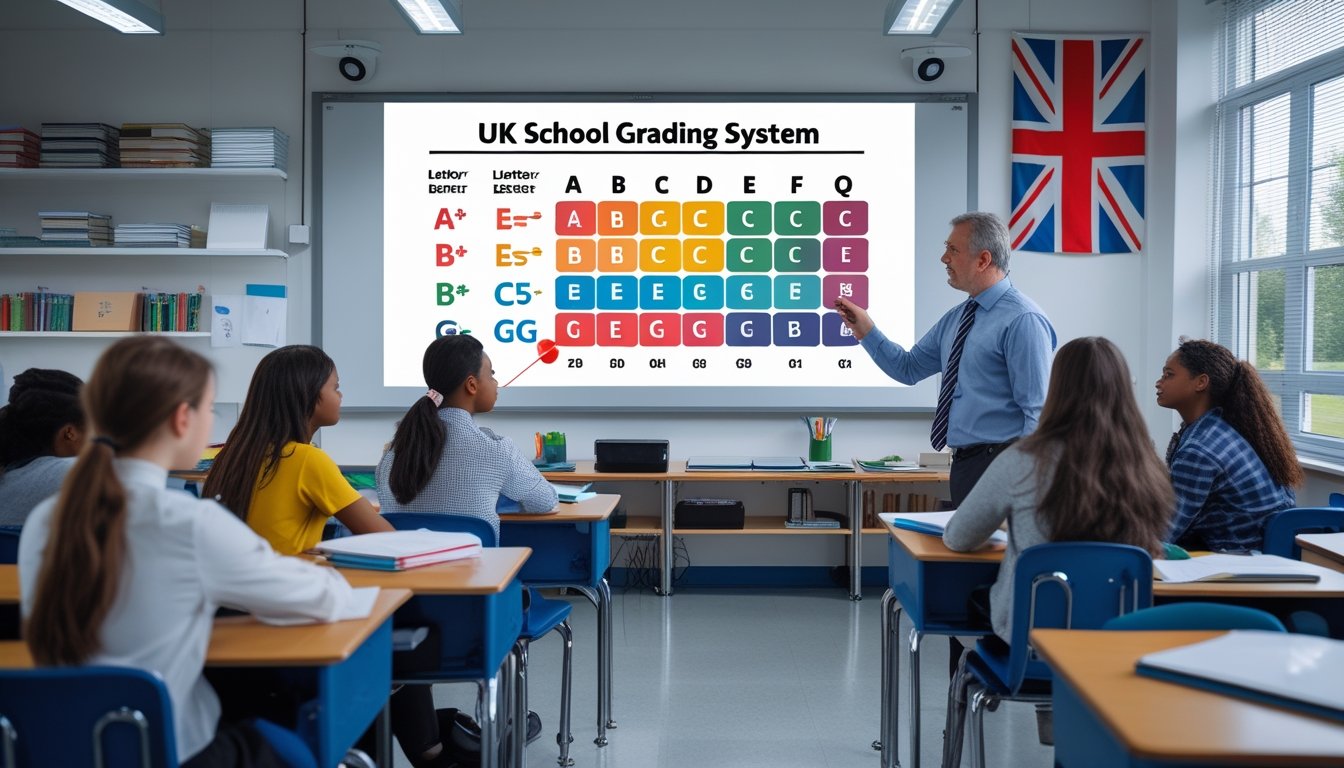
The GCSE grading system has adopted a numerical format ranging from 9 to 1, replacing the old letter grades. This change aims to provide more precision in grade differentiation, offering a clearer picture of student performance. As students progress beyond GCSEs, they encounter A-Levels, which continue to use letters (A* to E) to mark achievements, thus shaping the academic futures of those pursuing higher education.
Curiosity about how these grades impact educational pathways and career decisions is common, especially for those unfamiliar with the UK system. By delving into the nuances of both GCSE and A-Level grading, we gain a robust framework to better understand the academic landscape and its implications for student progression.
Key Takeaways
- UK school grades have shifted to a numerical system for GCSEs.
- A-Level results influence educational and career paths.
- Understanding these systems helps navigate academic options in the UK.
GCSE Grading System in the UK
In the UK, the GCSE grading system has evolved to provide clearer differentiation among students' achievements. With the transition from a letter-based system to a numerical scale, it offers a more refined method to assess and compare academic performance.
What Is the 9-1 Grading Scale?
The 9-1 grading scale in the UK, introduced in 2017, replaces the traditional A* to G grades. Number 9 is the highest attainable grade, signifying exceptional performance, while grade 1 is the lowest, above only an ungraded U. The move to numbers allows for more precise differentiation, particularly among high-achieving students. This shift has also aimed at aligning UK standards more closely with international educational frameworks. Understanding these distinctions helps students, parents, and educators gauge academic performance with greater accuracy.
Comparing the Numerical and Letter Grades
The shift from letter grades to numbers might appear daunting at first, but the conversion is straightforward. A grade 9 equates to a high A*, while grades 7 and 8 correspond to an A. The middle grades, 4 and 5, represent a pass, similar to the C grade in earlier systems. Importantly, these numerical grades allow more nuanced assessments of student abilities. For instance:
- 9 - A: Exceptional
- 7 - A: High achievement
- 5 - C: Approximate pass
Using this scale, educators can better support students in targeting their academic goals.
How Grade Boundaries Are Determined
Grade boundaries are crucial as they define the thresholds between different grades. Examination boards set these boundaries by examining the overall difficulty of exam papers and the distribution of marks across the student population. The process involves statistical analysis and expert judgement to ensure fairness and consistency. Each subject may have distinct boundaries depending on these factors. The consistent adjustment and scrutiny guarantee that grades reflect a true representation of student performance, irrespective of exam difficulty variations from year to year.
GCSE Results and Their Significance
GCSE results hold significant weight for students' educational and career trajectories. These results often determine eligibility for further education courses and specific career paths. For instance, many sixth forms require particular grades in key subjects like Mathematics and English. The consequential nature of these results extends beyond immediate academic implications—informing university admissions and employment opportunities. In essence, GCSEs form the foundational benchmark for future aspirations, compelling students to invest effort and diligence in their studies. Their significance underscores the importance of the switch to more precise and informative grading practices.
Pathways and Progression After GCSEs

After completing their GCSEs, students in the UK have multiple pathways to consider, each leading to further education and potential career opportunities. Exploring entry requirements and understanding the grading systems for these options can help in making informed decisions about the future.
Entry Requirements for Sixth Form and Further Education
Entering Sixth Form or further education typically requires students to meet specific grade thresholds from their GCSEs. Sixth forms generally require a minimum of five GCSEs at grade 4 or above, including in subjects related to their chosen A-Level courses. Further education colleges might have similar or slightly flexible requirements for vocational courses. It's important for students to research the specific entry requirements of the institutions they are interested in, as these can vary. For certain subjects, higher grades in related GCSE subjects may be necessary to secure a place.
A-Level Grading and Advanced Qualifications
A-Levels remain the most traditional route for post-GCSE education, particularly for students aiming to attend university. A-Levels are typically graded from A* to E, with these grades playing a significant role in university admissions. Alongside A-Levels, students can also pursue Advanced Highers, especially in Scotland, where these qualifications serve as counterparts to A-Levels. Universities often set specific A-Level grade requirements for admission, with competitive courses demanding higher grades. It’s not uncommon for institutions to request certain grades in relevant subjects, ensuring students have the necessary foundation for advanced study.
Alternative Qualifications: BTECs and Vocational Routes
For those inclined towards practical learning, BTECs and other vocational qualifications offer viable alternatives to A-Levels. These qualifications cover a broad range of sectors, from business to healthcare. BTECs, at Level 3, are equivalent to A-Levels and are recognised by many universities and employers. They provide a mix of theoretical knowledge and practical skills, catering to students interested in fields where applied learning is beneficial. The flexibility of BTECs can also open doors to apprenticeships and other vocational opportunities, providing a dynamic pathway into careers immediately after secondary education or further academic pursuits.
Frequently Asked Questions

Understanding the UK school grading system involves looking at various qualifications and how they're assessed. We explore differences between GCSEs and A-Levels, grading criteria, UCAS tariffs, key educational stages, BTECs, and the grade appeal process.
What is the difference between GCSEs and A-Levels?
The primary difference between GCSEs and A-Levels lies in their academic level and purpose. GCSEs, taken at the end of Key Stage 4, are foundational exams covering a broad range of subjects. In contrast, A-Levels are advanced qualifications typically studied over two years in specific subjects that students choose to focus on for further education or university entry.
How are GCSE grades determined under the new grading system?
The current GCSE grading system in the UK uses a scale from 9 to 1, with 9 being the highest grade. This replaced the previous A* to G system. Grades are determined by performance in final exams and coursework where applicable. Exam boards assess students' work, maintain standards across subjects, and use these results to assign the respective grades.
Can you explain the UCAS tariff and how it relates to A-Level grades?
The UCAS tariff is a points system that translates A-Level and some other qualification results into a metric used for university admissions. Each A-Level grade is assigned a specific number of points—higher grades receive more points. Universities often use these tariff points as part of their admission requirements, providing a means to compare candidates' qualifications easily.
What are the key stages in the UK education system and their corresponding exams?
The UK education system is divided into several key stages. Key Stage 1 and 2 cover primary education, with assessments occurring through the SATs. Key Stage 3 includes the early years of secondary school leading to Key Stage 4, where students take GCSEs. Key Stage 5 corresponds to post-16 education, during which students typically sit for A-Level examinations.
How does the BTEC qualification fit into the UK grading structure?
BTECs are vocational qualifications that complement the academic GCSEs and A-Levels. They are graded differently, using distinctions such as Pass, Merit, Distinction, and Distinction*. BTECs provide practical learning in specific sectors and are recognised destinations for students aiming for employment or further education.
What is the process for appealing a grade in the UK educational system?
If students believe their grades do not reflect their performance, they can appeal through their school or college to the exam board. The formal appeal process typically involves re-assessment of exam scripts or coursework. Schools facilitate the submissions, and if necessary, appeal outcomes can lead to grade adjustments. It's vital to follow the specified timelines and procedures set by the exam boards for a successful appeal.